Physical Address
304 North Cardinal St.
Dorchester Center, MA 02124
Physical Address
304 North Cardinal St.
Dorchester Center, MA 02124

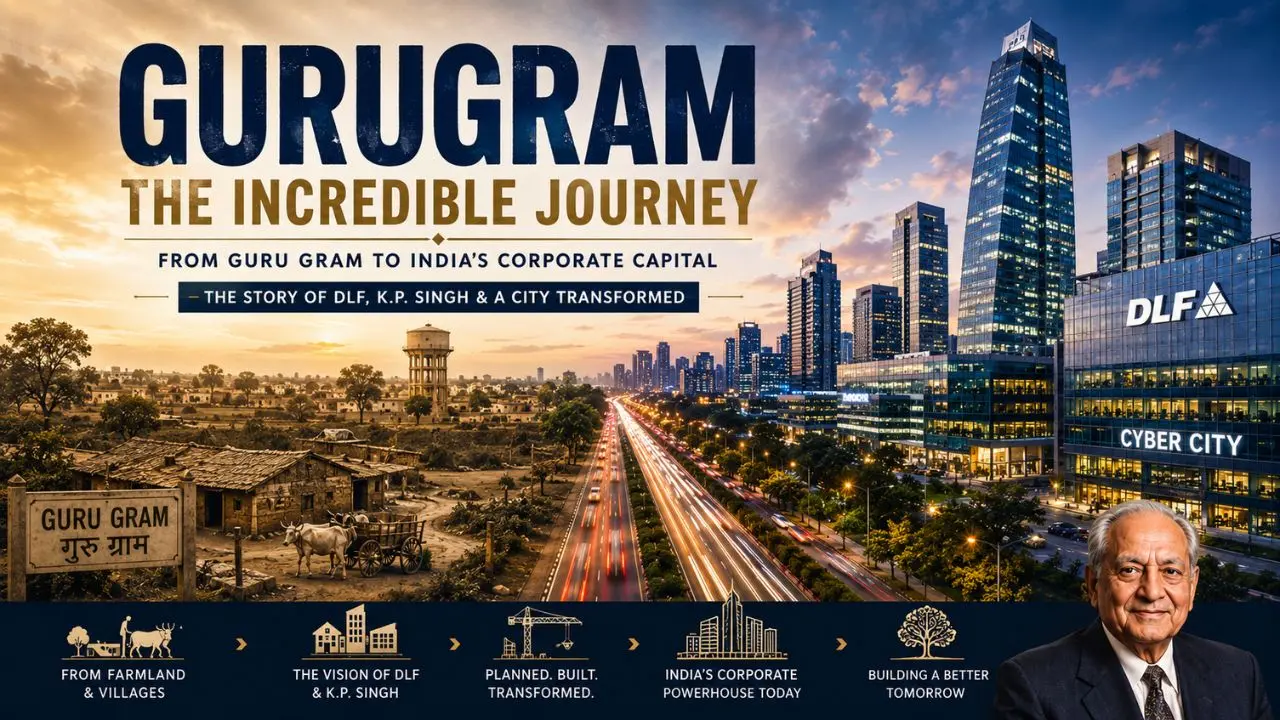
Today, Gurugram is known as India’s glittering corporate capital—a city of skyscrapers, luxury residences, multinational offices, and bustling expressways. Home to global corporations, premium residential communities, and iconic landmarks such as Cyber City and Golf Course Road, it is difficult to imagine that just a few decades ago, much of this landscape consisted of agricultural fields, rocky terrain, and small villages. The transformation of Gurugram from a largely rural district into the country’s most prominent privately developed urban centre is one of the most remarkable urban stories in modern India.
However, Gurugram’s story did not begin with glass towers and corporate campuses. Its origins stretch back thousands of years into the realm of mythology and ancient Indian history. According to popular tradition, the region derives its name from “Guru Gram” or “the village of the teacher,” referring to the legendary warrior-scholar Guru Dronacharya of the Mahabharata, who is believed to have received this land as a gift from the Pandavas and Kauravas. While historians continue to debate the historical evidence behind this association, the connection remains deeply embedded in the city’s cultural identity and continues to shape its modern narrative.
For centuries, Gurugram remained a quiet agrarian settlement situated on the fringes of Delhi. Under Mughal and later British administration, the region retained its rural character, with agriculture serving as the backbone of the local economy. Even after India’s independence, few could have predicted that this relatively obscure district would one day emerge as one of Asia’s most significant business hubs.
The turning point came in the latter half of the twentieth century when a private real estate company—Delhi Land & Finance (DLF)—saw potential where most saw barren land. Led by visionary businessman Kushal Pal Singh, DLF embarked on an ambitious experiment in urban development that would fundamentally reshape not only Gurugram’s skyline but also India’s real estate sector. Beginning with the acquisition of vast stretches of farmland in the 1970s and culminating in the development of DLF City, Cyber City, and some of the country’s most expensive residential communities, DLF’s journey became inseparable from Gurugram’s own evolution.
This is the story of how an ancient village associated with mythology transformed into the “Millennium City”—and how DLF played a central role in creating modern Gurugram as we know it today.
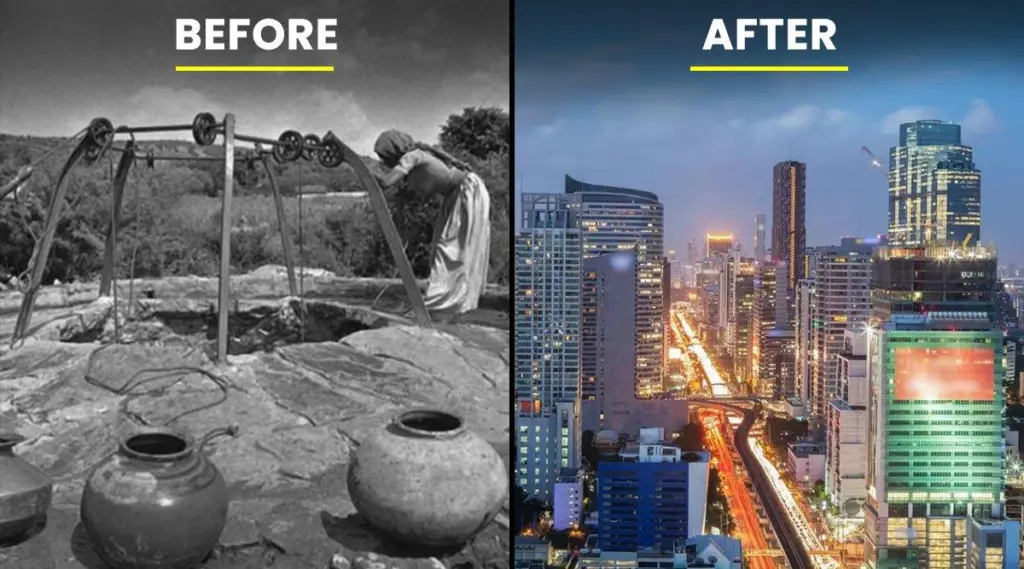
Long before Gurugram became synonymous with glass skyscrapers, multinational corporations, and luxury developments, the region occupied an important place in India’s mythological and historical landscape. The roots of the city stretch back thousands of years, intertwining legend, culture, and history to create an identity that continues to resonate even today.
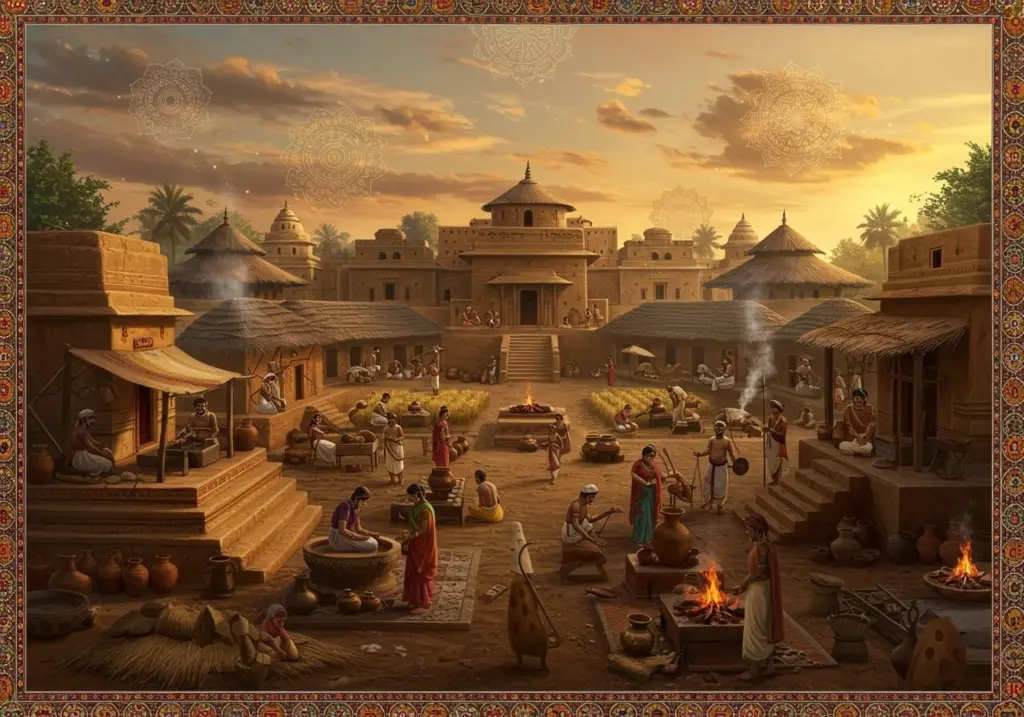
The name “Gurugram” is derived from the Sanskrit words Guru (teacher) and Gram (village), literally translating to “Village of the Guru.” According to popular tradition rooted in the Mahabharata, this area was gifted by the Kauravas and Pandavas to their revered teacher, Guru Dronacharya, as gurudakshina (a traditional offering made to a teacher).
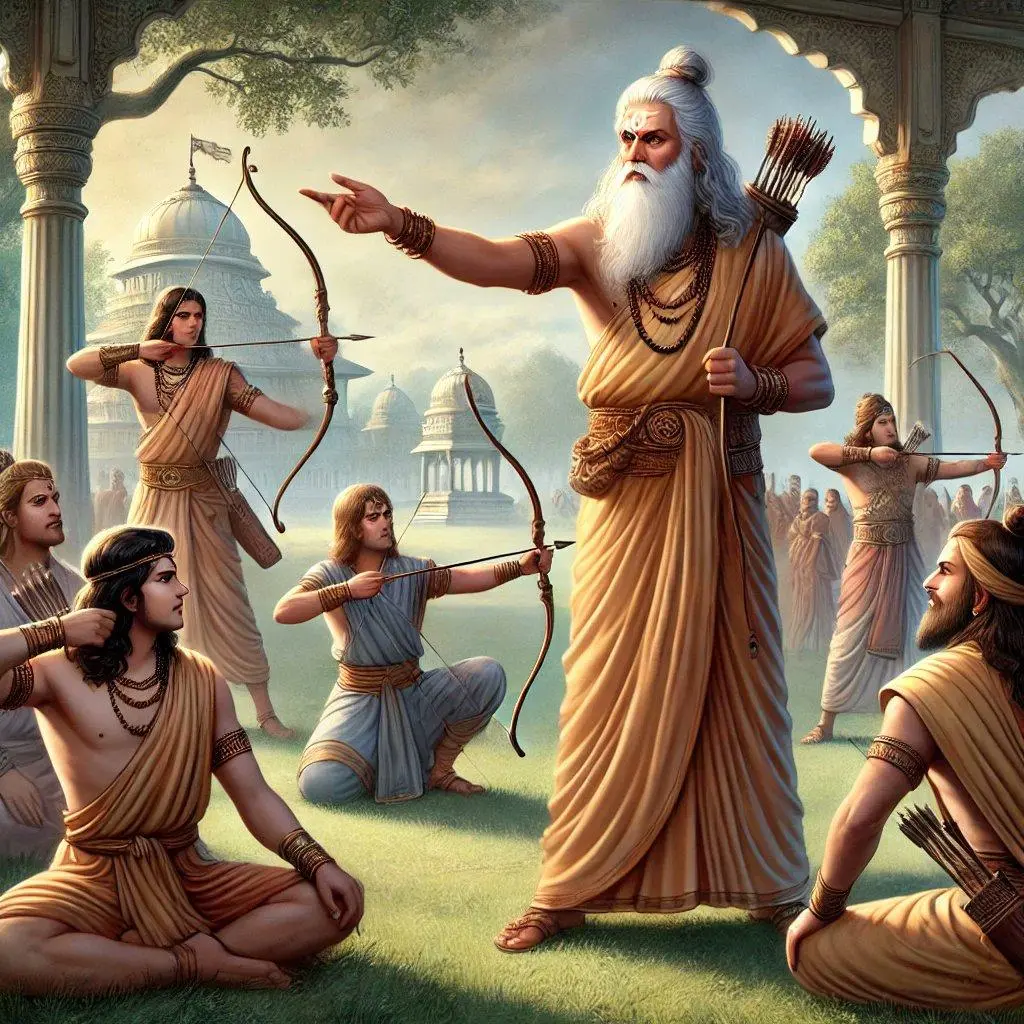
Guru Dronacharya occupies a prominent place in Indian mythology as the royal guru who trained both the Pandavas and Kauravas in warfare, archery, and military strategy. It is believed that he established his ashram in this region, where he imparted knowledge to his disciples. Over time, the settlement surrounding the ashram came to be known as “Guru Gram.”
Although definitive archaeological evidence directly linking modern Gurugram to Dronacharya remains limited, the legend has endured for centuries and forms an integral part of the city’s cultural heritage. In recognition of this historical association, the Government of Haryana officially renamed “Gurgaon” to “Gurugram” in 2016, restoring the city’s ancient identity.
Historically, the region formed part of the broader cultural and political landscape surrounding ancient Delhi and the northern plains of India. Due to its strategic location near the Aravalli Hills and important trade routes connecting northern India, the area witnessed continuous human habitation for centuries.
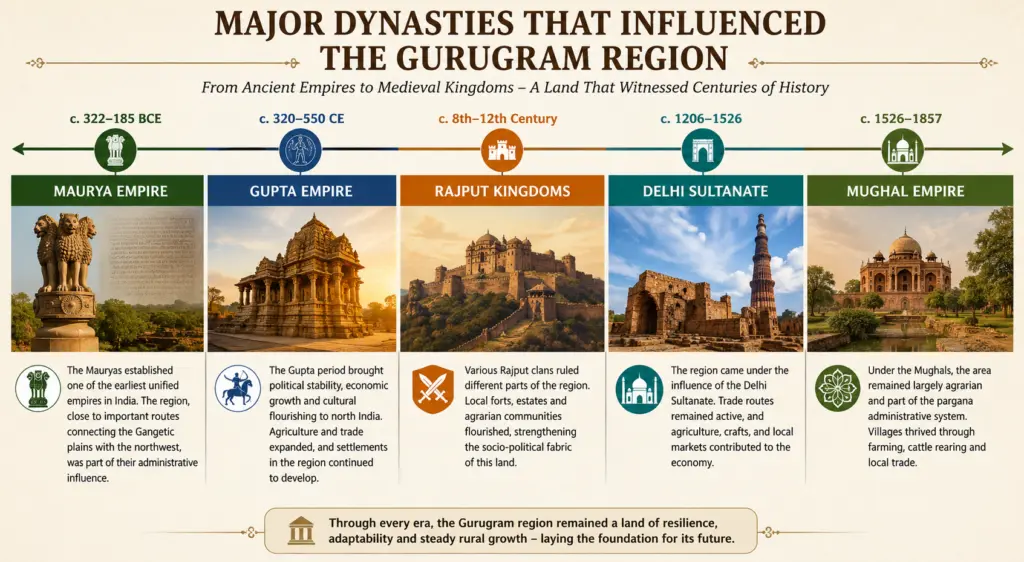
Archaeological findings from surrounding regions indicate that settlements existed in and around present-day Gurugram during various periods of ancient Indian history. The fertile plains supported agricultural communities, while nearby trade corridors facilitated the movement of goods, people, and ideas.
The region also fell under the influence of several major ancient kingdoms and empires, including the Mauryas, Guptas, and later regional dynasties that ruled northern India. However, unlike nearby Delhi, Gurugram remained predominantly rural and agricultural, with small settlements scattered across the landscape.
During the medieval era, Gurugram came under the influence of successive dynasties that ruled Delhi, including the Delhi Sultanate and later the Mughal Empire. Owing to its proximity to Delhi—the political centre of northern India—the region benefited from trade and agricultural activity, although it never developed into a major urban centre.
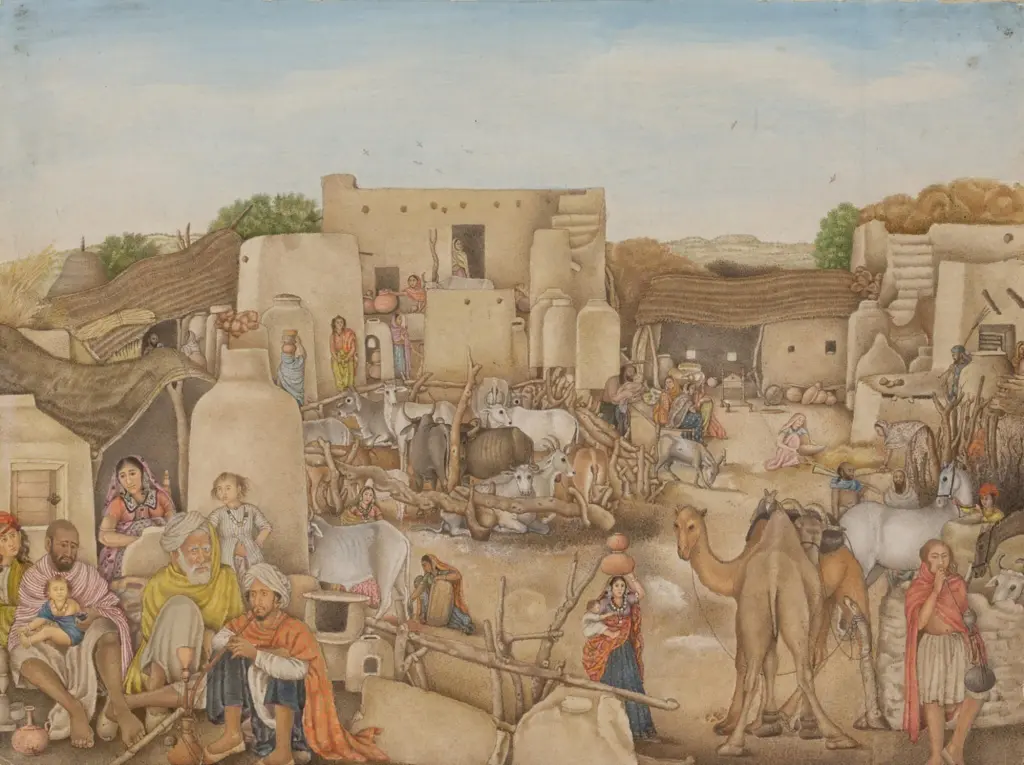
The villages of the region primarily depended on agriculture, cattle rearing, and local trade. The fertile lands supported crops such as wheat, millet, and pulses, while the Aravalli terrain shaped the area’s geographical character.
Despite the rise and fall of powerful empires in Delhi, Gurugram largely retained its rural identity. For centuries, it remained a landscape of villages, farms, grazing lands, and small settlements—a character that persisted well into the twentieth century.
By the early nineteenth century, the region that would eventually become modern-day Gurugram had come under British control following the decline of the Mughal Empire and the expansion of the British East India Company’s influence across northern India. In 1803, after defeating the Marathas during the Second Anglo-Maratha War, the British established their authority over Delhi and the surrounding territories, including present-day Gurugram.
Recognizing the administrative importance of the area, the British formally established Gurgaon district in 1818. The district initially formed part of the Delhi Territory before later being incorporated into the Punjab Province under British India. Despite its proximity to Delhi, Gurgaon remained a predominantly rural and agrarian district throughout the colonial period.
Unlike major colonial cities such as Delhi, Calcutta, Bombay, or Lahore, Gurgaon received limited investment in urban infrastructure. During the colonial period, the British administration largely regarded the district as an agrarian area, valuing it mainly for its ability to generate revenue through agricultural production and land taxation. As a result, economic activity revolved largely around farming, livestock rearing, and local trade.
Agriculture formed the backbone of the district’s economy. Farmers cultivated crops such as wheat, millet, barley, gram, and pulses, relying heavily on monsoon rains due to the limited availability of irrigation facilities. Periodic droughts and water scarcity often affected agricultural productivity, making life challenging for the largely rural population.
The district’s geography also played a significant role in shaping its development. Large parts of Gurgaon consisted of semi-arid plains interspersed with rocky outcrops of the ancient Aravalli Range. While these conditions supported agriculture in certain areas, they also limited large-scale urban expansion during the colonial era.
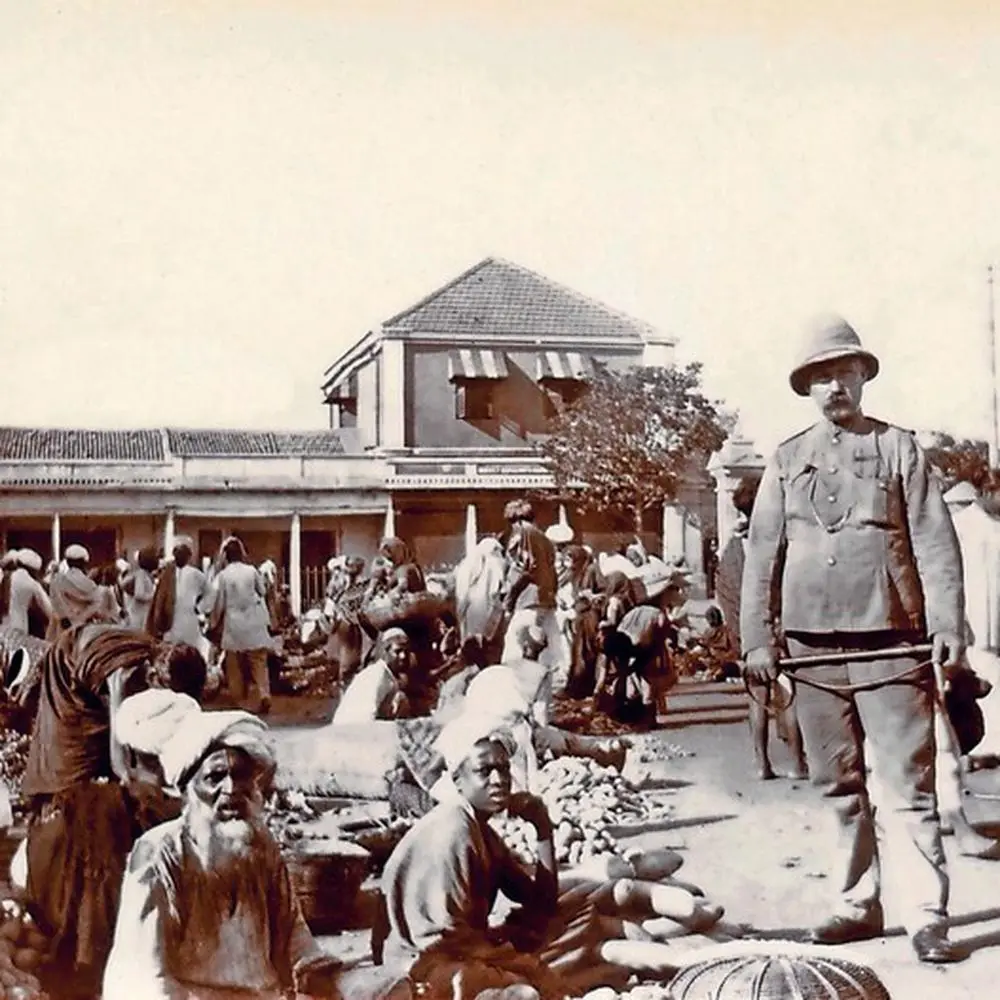
The British administration introduced modern land revenue systems, conducted detailed surveys, and prepared district gazetteers documenting the region’s geography, population, economy, and social structure. These records provide valuable insights into Gurgaon during the nineteenth and early twentieth centuries, portraying a landscape dominated by villages, agricultural fields, cattle grazing, and scattered market settlements.
Although the arrival of railways and improved road connectivity in nearby regions gradually enhanced trade opportunities, Gurgaon itself remained relatively underdeveloped compared to neighbouring Delhi. Even on the eve of India’s independence in 1947, the district retained much of its rural character, with little indication that it would one day evolve into one of India’s leading urban centres.
For a significant part of the British colonial era, Gurgaon was recognized primarily for its rural settlements, agriculture-based economy, and persistent issues such as drought and economic hardship, rather than for trade, commerce, or industrial development. This rural identity would persist for decades, laying the foundation for the dramatic transformation that would unfold in the latter half of the twentieth century.
Today, Gurugram is synonymous with gleaming skyscrapers, luxury condominiums, and bustling corporate parks. Yet, just a few decades ago, the landscape looked entirely different. Before the arrival of large-scale private development, Gurgaon was a sleepy district on the outskirts of Delhi—an area that many investors, businesses, and even homebuyers considered unattractive and unsuitable for urban growth.
During the 1960s and 1970s, most of present-day Gurugram consisted of agricultural fields, scattered villages, rocky terrain, and vast stretches of barren land. The region was sparsely populated, with local communities primarily engaged in farming, cattle rearing, and small-scale trade. Villages such as Sikanderpur, Nathupur, Wazirabad, Chakkarpur, Sarhol, and Dhanwapur dominated the landscape long before they became part of a sprawling metropolitan city.
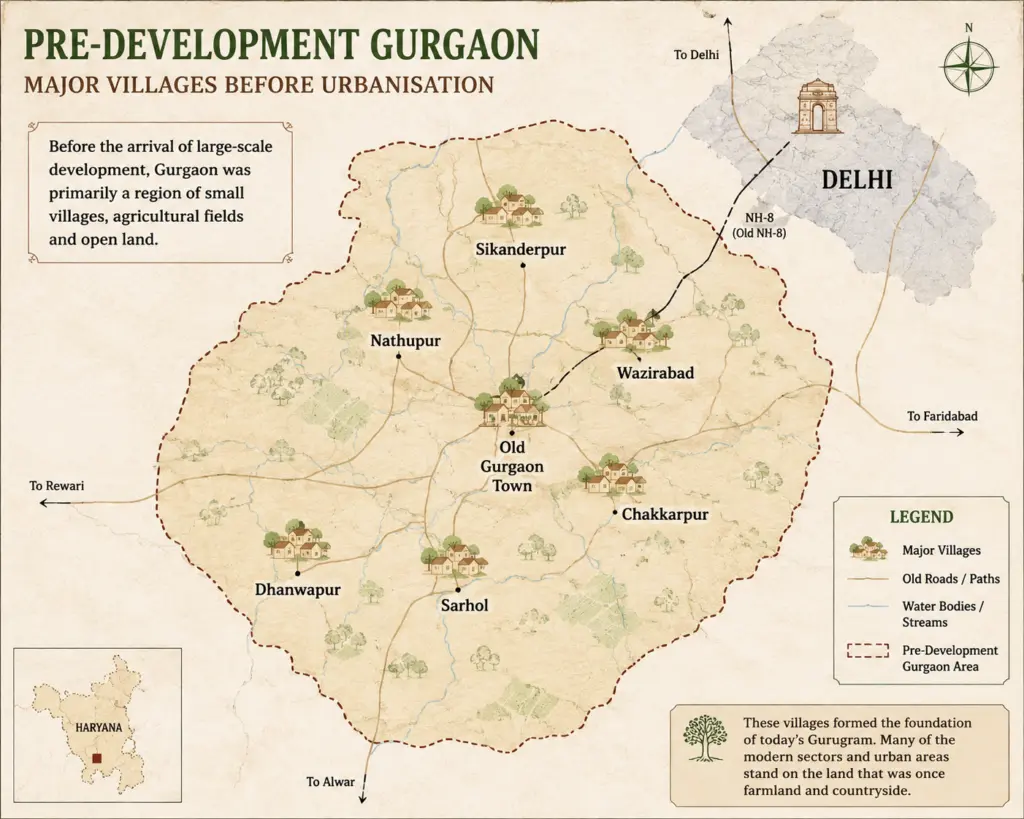
One of the biggest challenges facing Gurgaon was its inadequate infrastructure. Roads were narrow and poorly maintained, public transportation was minimal, and reliable electricity and water supply remained major concerns. Large sections of the region lacked basic urban amenities, making the prospect of large-scale development appear highly risky.
Water scarcity was another persistent issue. Much of the district lay within a semi-arid zone influenced by the Aravalli landscape. Agriculture depended heavily on monsoon rains, and groundwater resources were limited. Frequent drought-like conditions and poor irrigation infrastructure further reduced the area’s attractiveness for investors.
The region’s proximity to Delhi, which is now considered one of Gurugram’s greatest advantages, was not viewed in the same way during the mid-twentieth century. At the time, Delhi itself was still expanding, and few people were willing to move beyond the capital’s established neighbourhoods. The idea of living several kilometres away in what was largely a rural district seemed impractical to many.
Real estate developers were equally hesitant. Most private builders preferred investing within Delhi or in established urban centres rather than purchasing land in Gurgaon. The absence of modern infrastructure, uncertain demand, and limited government support created a perception that large-scale urban development in the area was economically unviable.
Former residents and early settlers often recall that travelling to Gurgaon from Delhi involved passing through long stretches of empty land, farms, and isolated villages. There were few commercial establishments, virtually no high-rise buildings, and little indication that the area would one day become India’s leading corporate hub.
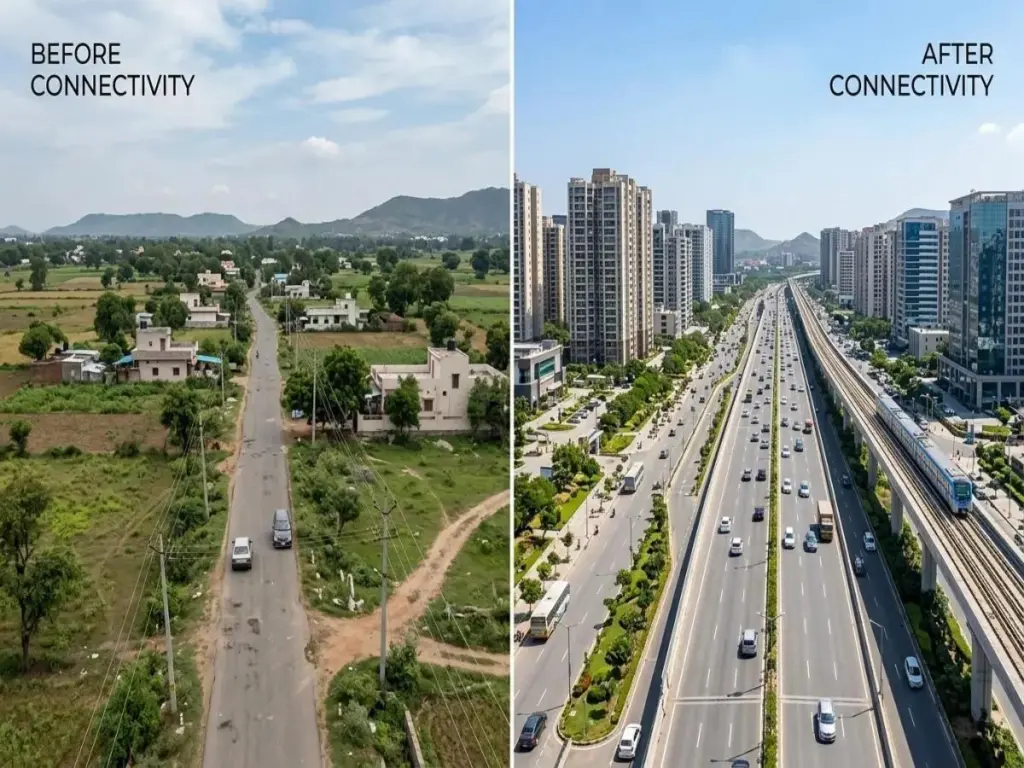
Ironically, it was precisely these challenges—vast land availability, low land prices, and proximity to the national capital—that would eventually attract visionary developers such as DLF. At a time when most saw barren land and uncertainty, DLF saw the opportunity to build an entirely new city from the ground up.
What followed was one of the most dramatic urban transformations in modern Indian history.
Long before Gurugram emerged as India’s corporate capital, the foundations for its transformation were being laid elsewhere. The story begins not in Gurgaon, but in Delhi, where a pioneering real estate company would eventually redefine urban development in India.
DLF, originally known as Delhi Land & Finance, was founded in 1946 by Chaudhary Raghvendra Singh, just a year before India’s independence. At a time when the country was on the verge of political and social transformation, DLF envisioned creating modern residential colonies to accommodate Delhi’s rapidly growing population.
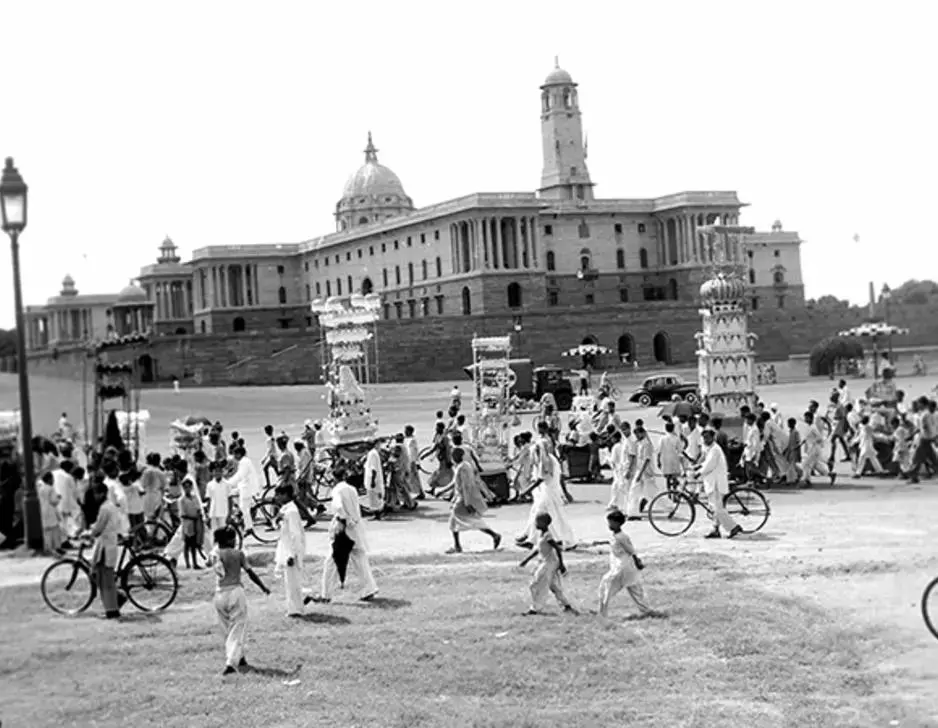
In the years immediately following independence and Partition, Delhi experienced an unprecedented influx of refugees and migrants. The city faced an acute housing shortage, creating immense demand for planned residential neighbourhoods. Recognising this opportunity, DLF began acquiring land and developing some of Delhi’s earliest private residential colonies.
During the 1950s, DLF played a significant role in shaping post-independence Delhi’s urban landscape. The company was involved in the development of several prominent neighbourhoods, many of which remain among the capital’s most sought-after addresses today. These included South Extension, Greater Kailash, Hauz Khas, Kailash Colony, and parts of Rajouri Garden, among others.
| Colony/Area | Approximate Development Period | Significance |
| Krishna Nagar | Late 1940s | Among DLF’s earliest residential developments in post-independence Delhi. |
| South Extension | Early 1950s | Developed into one of Delhi’s most prestigious residential and commercial neighbourhoods. |
| Greater Kailash (GK-I & GK-II) | 1950s | Became one of South Delhi’s most upscale residential colonies. |
| Hauz Khas | 1950s | Evolved into a prominent residential and cultural hub in South Delhi. |
| Kailash Colony | 1950s | One of Delhi’s earliest planned private residential colonies. |
| Rajouri Garden (select areas) | 1950s | Helped accommodate Delhi’s rapidly growing post-Partition population. |
DLF quickly established itself as one of India’s leading private real estate developers, pioneering planned residential development at a scale rarely seen in the country at that time.
The company’s trajectory changed dramatically in 1957 with the enactment of the Delhi Development Act. The legislation led to the creation of the Delhi Development Authority (DDA), which was entrusted with the responsibility of overseeing planned urban development in the national capital.
Under the new framework, much of the authority for land acquisition and urban development shifted to the government. As a result, private developers like DLF found their role in Delhi significantly restricted.
For DLF, this marked a critical turning point. With opportunities in Delhi becoming increasingly limited, the company began looking beyond the capital for future expansion. What initially appeared to be a setback would eventually become one of the most consequential decisions in Indian real estate history.
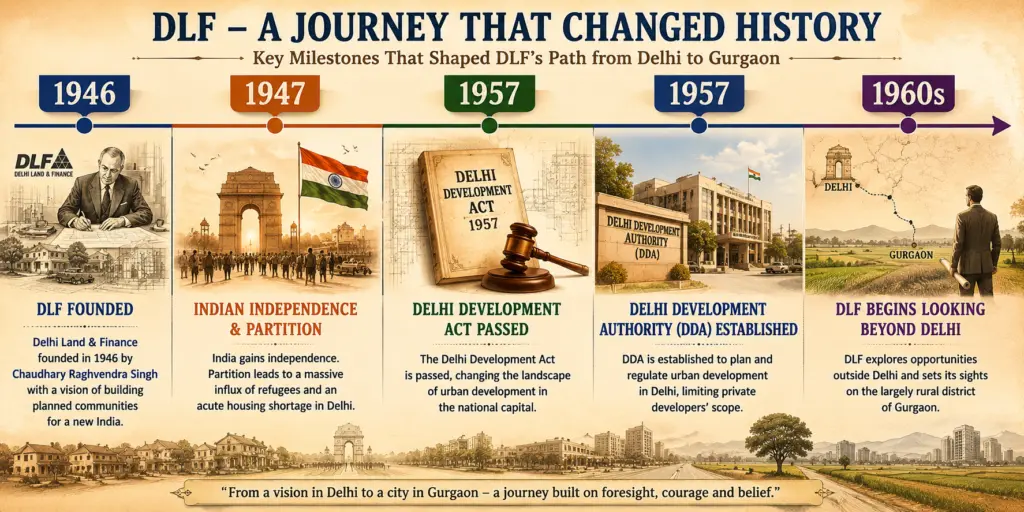
Throughout the 1960s and 1970s, DLF explored new opportunities outside Delhi. At the time, few regions offered the combination of large land parcels and proximity to the national capital. Eventually, the company turned its attention to the largely rural district of Gurgaon, located just southwest of Delhi.
The decision was far from obvious. Gurgaon lacked modern infrastructure, had limited connectivity, and was considered an unlikely destination for urban development. However, DLF’s leadership believed that its proximity to Delhi and the availability of vast tracts of relatively inexpensive land presented a unique long-term opportunity.
This vision would eventually lay the groundwork for one of the largest private urban development projects in India’s history—and forever alter the destiny of Gurgaon.
If Gurugram is the product of a bold urban experiment, then Kushal Pal Singh—better known as K.P. Singh—was undoubtedly its chief architect. Widely regarded as the visionary behind modern Gurgaon, Singh transformed a largely unknown agricultural district into one of India’s most prominent corporate and real estate destinations.
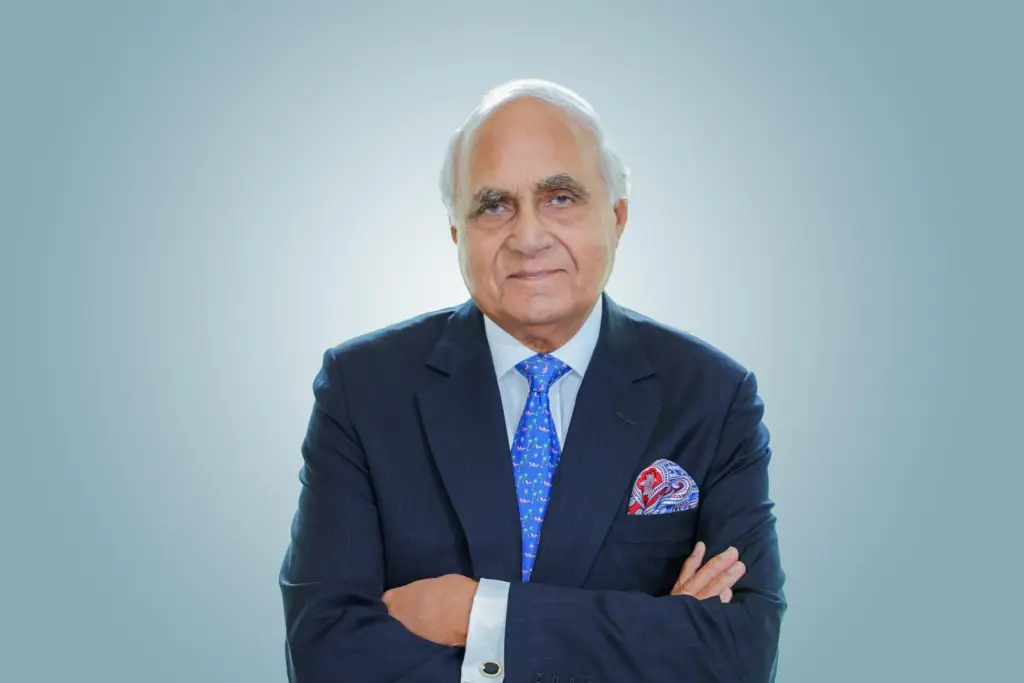
At a time when few people believed that Gurgaon had any significant future, K.P. Singh saw an opportunity to create an entirely new city on the outskirts of Delhi. His vision, persistence, and willingness to take enormous risks would not only reshape Gurgaon but also revolutionise private urban development in India.
Born on August 15, 1931, in Bulandshahr, Uttar Pradesh, K.P. Singh came from a family with strong agricultural roots. He completed his education at Meerut College before attending the prestigious Royal Military Academy Sandhurst in the United Kingdom.
Following his education, Singh served as an officer in the Indian Army. However, his career took an unexpected turn when he joined Delhi Land & Finance (DLF) in 1961 after marrying into the family of Chaudhary Raghvendra Singh, the founder of DLF.
At the time, DLF was facing significant challenges due to restrictions imposed by the Delhi Development Act. The company needed new opportunities for growth, and K.P. Singh would soon play a pivotal role in charting its future direction.
During the 1970s and early 1980s, Gurgaon was still a landscape dominated by villages, farms, and barren land. Basic infrastructure was minimal, roads were poorly developed, and urban amenities were virtually non-existent. Most investors and developers dismissed the area as unsuitable for large-scale urban development.
The prevailing sentiment was simple: Why would anyone choose to live in Gurgaon when Delhi was right next door?
Yet K.P. Singh believed that Gurgaon possessed a unique strategic advantage—its proximity to the national capital. He recognised that as Delhi expanded, the city would eventually run out of land, forcing growth beyond its traditional boundaries.
Where others saw uncertainty and risk, Singh saw possibility.
DLF began gradually acquiring large tracts of land across Gurgaon during the 1970s and 1980s. The process required extensive negotiations with local farmers and landowners, many of whom had little understanding of how dramatically the region would change in the coming decades.
The company’s strategy was long-term and highly unconventional for its time. Rather than focusing on isolated projects, DLF envisioned developing an integrated urban ecosystem comprising residential neighbourhoods, commercial districts, roads, and supporting infrastructure.
This patient approach to land aggregation would eventually provide DLF with one of the largest privately owned land banks in India.
The economic and political environment of the 1980s further strengthened DLF’s ambitions. During the tenure of Prime Minister Rajiv Gandhi, India witnessed gradual economic liberalisation and greater openness toward private sector participation.
Several policy changes introduced by the Haryana government encouraged private developers to establish integrated townships outside Delhi. These policy and regulatory changes paved the way for DLF to pursue ambitious large-scale development projects in Gurgaon, creating an environment conducive to rapid urban expansion and private real estate investment.
Although various anecdotes and business legends surround the relationship between K.P. Singh and influential policymakers of the era, historians note that Gurgaon’s growth ultimately resulted from a combination of entrepreneurial vision, favourable policies, and changing economic realities.
By the early twenty-first century, K.P. Singh had transformed DLF into India’s largest listed real estate company and helped create what many describe as the country’s most successful private city-building experiment.
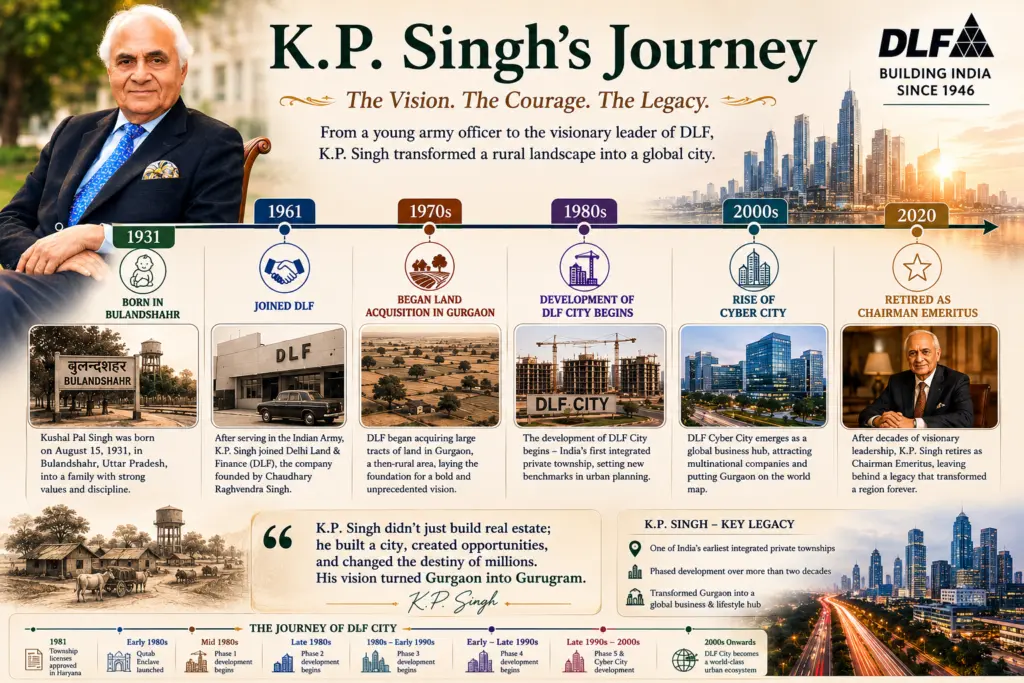
Under his leadership, Gurgaon transformed from a largely rural landscape of villages into an internationally recognized business hub, home to multinational companies, premium residential developments, and a rapidly growing urban population numbering in the millions.
Today, K.P. Singh is widely recognised as the man who changed Gurgaon forever—an entrepreneur whose vision permanently altered India’s urban landscape.
The transformation of Gurgaon from a sleepy agricultural district into India’s corporate capital did not happen overnight. It unfolded in carefully planned stages over several decades, largely driven by DLF’s ambitious vision of creating a self-sustaining urban ecosystem on the outskirts of Delhi.
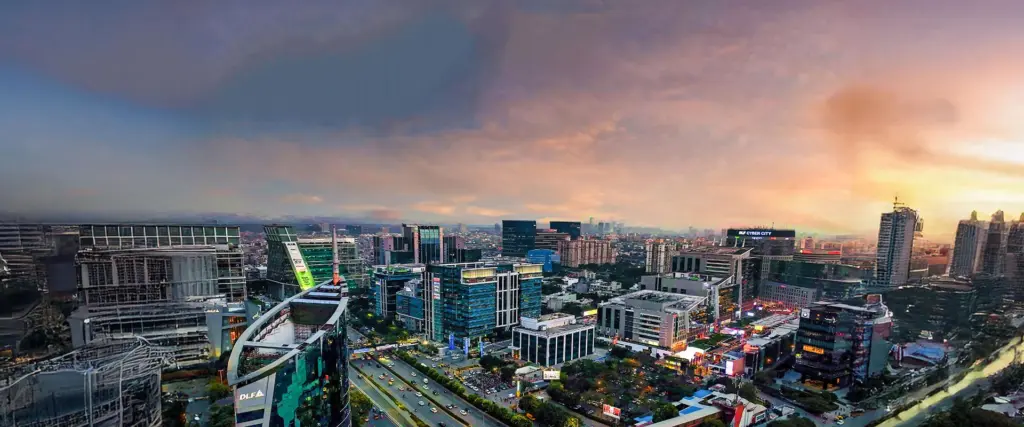
The foundation of this transformation was laid in the early 1980s when DLF launched Qutab Enclave, an integrated township project that would eventually evolve into what is now known as DLF City. At a time when large-scale private urban development was virtually unheard of in India, DLF embarked on an unprecedented experiment—building an entire city from scratch.
Unlike conventional residential projects, DLF envisioned a comprehensive urban environment comprising residential neighbourhoods, commercial centres, schools, markets, parks, and supporting infrastructure. This long-term approach would fundamentally reshape the future of Gurgaon.
The story of DLF City began in 1981 when the Haryana government granted licenses for the development of large private residential townships in Gurgaon. DLF’s flagship project, Qutab Enclave, was among the first integrated private townships to be approved in the region.
Named after Delhi’s iconic Qutub Minar, Qutab Enclave was designed to provide planned residential communities with wide roads, green spaces, and modern amenities—features that were relatively uncommon in Indian urban planning at the time.
What started as a bold experiment would eventually expand into five major phases, each reflecting Gurgaon’s evolving urban character.
Developed during the early to mid-1980s, DLF Phase 1 marked the beginning of modern Gurgaon. The area primarily consisted of plotted developments and independent houses, attracting affluent families seeking spacious homes near Delhi.
Its strategic location along the Delhi-Gurgaon corridor, coupled with relatively affordable land prices, made Phase 1 one of the earliest successful residential developments in Gurgaon. Over time, the locality evolved into one of the city’s most prestigious addresses.
The emergence of commercial hubs such as the Shopping Mall and proximity to MG Road further enhanced its appeal.
As demand for housing increased, DLF expanded its development footprint through DLF Phase 2. Situated near the historic National Highway 48 (formerly NH-8), the location benefited from enhanced connectivity, providing convenient access to both Delhi and Gurgaon’s rapidly developing commercial and business districts.
Phase 2 introduced a mix of plotted developments, builder floors, and independent villas. Its accessibility and relatively developed infrastructure made it particularly attractive to professionals and business owners.
The development of DLF Phase 3 coincided with the rapid economic liberalisation of the 1990s and the arrival of multinational corporations in Gurgaon.
Situated close to what would later become Cyber City, Phase 3 witnessed explosive growth in both residential and rental demand. The locality became especially popular among corporate employees due to its proximity to office complexes and excellent connectivity.
The rise of gated communities, commercial establishments, and rental housing transformed Phase 3 into one of Gurgaon’s most dynamic urban neighbourhoods.
By the late 1990s and early 2000s, Gurgaon had firmly established itself as a major business destination. Reflecting this transition, DLF Phase 4 introduced a more premium urban experience.
The development featured wider roads, landscaped environments, upscale residential options, and iconic commercial destinations such as Galleria Market. The locality quickly became synonymous with high-quality urban living and remains one of Gurugram’s most sought-after residential areas.
DLF Phase 5 represented the next stage in Gurgaon’s evolution—from an emerging business centre to a global luxury destination.
Anchored along Golf Course Road, Phase 5 became home to some of India’s most prestigious residential projects, including The Pinnacle, The Aralias, The Magnolias, and later The Camellias. The area introduced world-class amenities, high-rise luxury living, golf-centric communities, and premium commercial developments.
Today, DLF Phase 5 stands as a symbol of Gurugram’s transformation into one of India’s most affluent urban centres.
DLF’s vision extended far beyond housing. As Gurgaon expanded, the company invested heavily in commercial infrastructure, office spaces, retail destinations, and mixed-use developments. This integrated planning approach eventually paved the way for landmark projects such as Cyber City and Cyber Hub, cementing Gurugram’s status as a global business destination.
The development of DLF City remains one of India’s most significant private urbanisation projects—a city within a city that fundamentally transformed not only Gurgaon, but also the broader landscape of Indian real estate.
While DLF’s residential developments laid the foundation for modern Gurgaon, the city’s true transformation began in the 1990s and accelerated dramatically in the early 2000s with the arrival of multinational corporations. Over the next two decades, Gurgaon evolved from a primarily residential township into one of Asia’s most important corporate and business destinations.
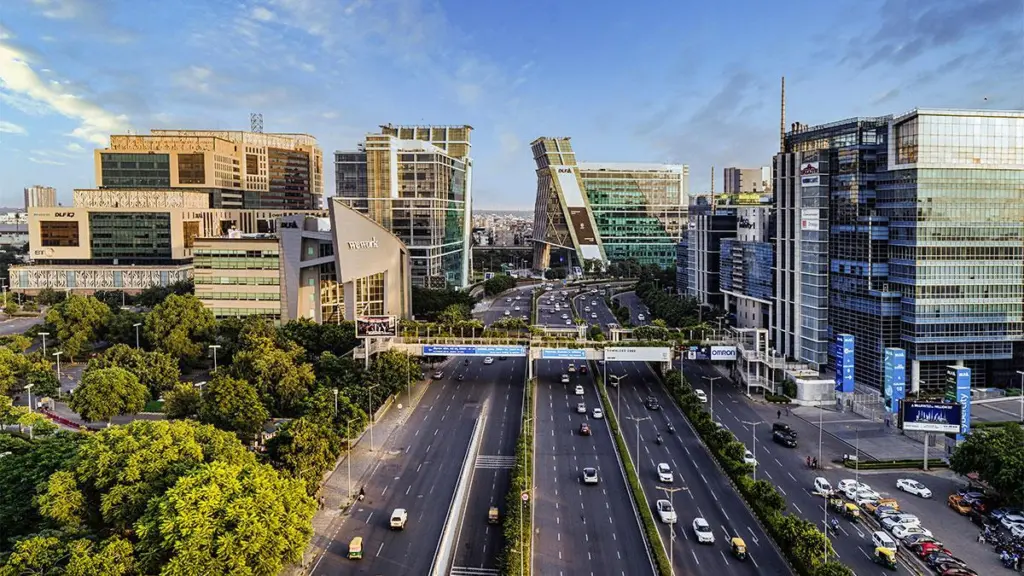
Today, Gurugram hosts hundreds of multinational companies, Fortune 500 firms, technology giants, consulting firms, financial institutions, and start-ups. However, this corporate ecosystem was built gradually through a combination of economic liberalisation, strategic location advantages, and large-scale private infrastructure development.
A defining moment in India’s economic history occurred in 1991, when sweeping economic reforms were introduced under the leadership of Prime Minister P. V. Narasimha Rao and Finance Minister Manmohan Singh. These reforms liberalised the Indian economy, reduced restrictions on foreign investment, and opened the country to global businesses.
As multinational corporations began exploring opportunities in India, the demand for modern office spaces, world-class infrastructure, and business-friendly environments increased rapidly. Delhi, constrained by land availability and strict development regulations, could not fully accommodate this growing demand.
Gurgaon, located just beyond Delhi’s borders, emerged as the ideal alternative.
Several factors contributed to Gurgaon’s emergence as India’s corporate powerhouse:
Together, these advantages made Gurgaon an attractive destination for both Indian and international corporations.
Perhaps no project symbolises Gurgaon’s corporate rise more than DLF Cyber City.
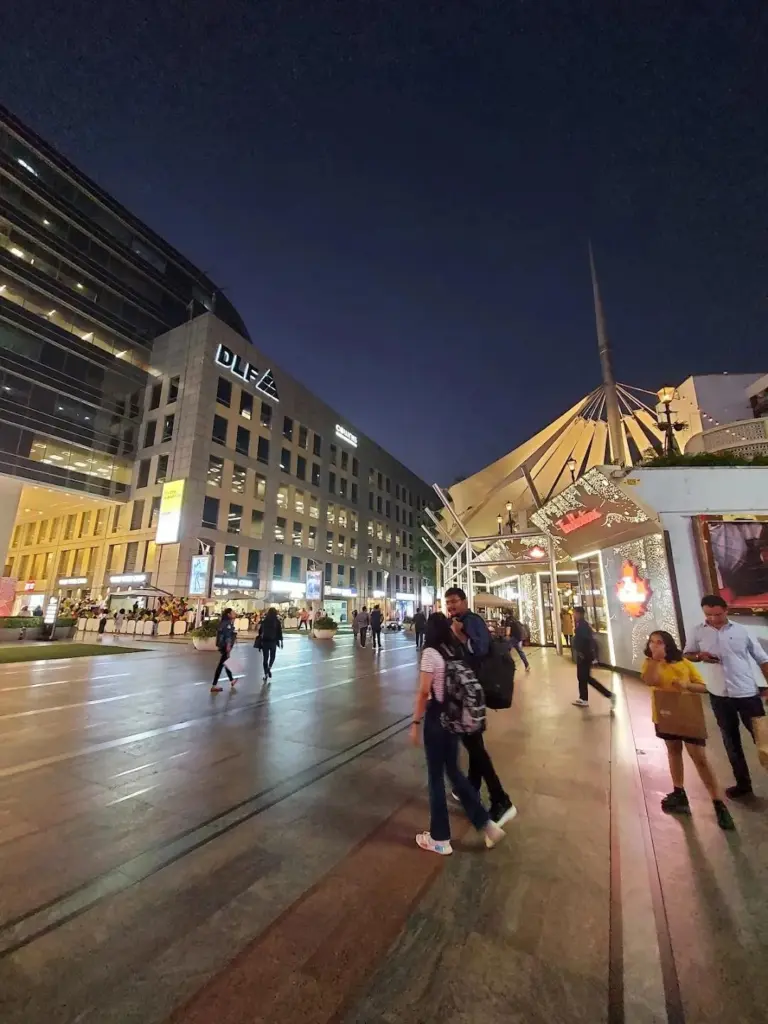
Developed during the early 2000s, Cyber City introduced a new model of integrated commercial development in India. Featuring modern glass office towers, advanced infrastructure, and world-class business facilities, the complex quickly attracted major multinational corporations across sectors including information technology, consulting, telecommunications, banking, and business process outsourcing (BPO).
Companies such as IBM, Accenture, Deloitte, Microsoft, KPMG, and numerous global enterprises established offices in Gurgaon, fundamentally changing the city’s economic landscape.
Cyber City not only transformed Gurgaon into a global business hub but also reshaped India’s commercial real estate industry.
The rapid expansion of India’s IT and BPO sectors during the late 1990s and early 2000s further accelerated Gurgaon’s growth.
Large numbers of young professionals migrated to the city in search of employment opportunities. This influx created unprecedented demand for housing, retail spaces, entertainment centres, educational institutions, and supporting infrastructure.
Neighbourhoods such as DLF Phases 2 and 3, Sushant Lok, and Golf Course Road experienced significant residential growth as professionals sought accommodation close to their workplaces.
By the 2010s, Gurgaon had firmly established itself as one of India’s leading corporate centres. The city became home to numerous Fortune 500 companies and emerged as a major destination for technology firms, start-ups, financial services companies, and multinational corporations.
The development of commercial hubs such as Cyber Hub, Udyog Vihar, Golf Course Road, and Golf Course Extension Road further diversified Gurgaon’s economic landscape.
Today, Gurugram contributes significantly to Haryana’s economy and stands as one of the country’s most influential business ecosystems—a remarkable transformation for a region that, just a few decades earlier, consisted primarily of villages and farmland.
The rise of Corporate Gurgaon remains one of the most significant examples of private-sector-led urbanisation in modern India.
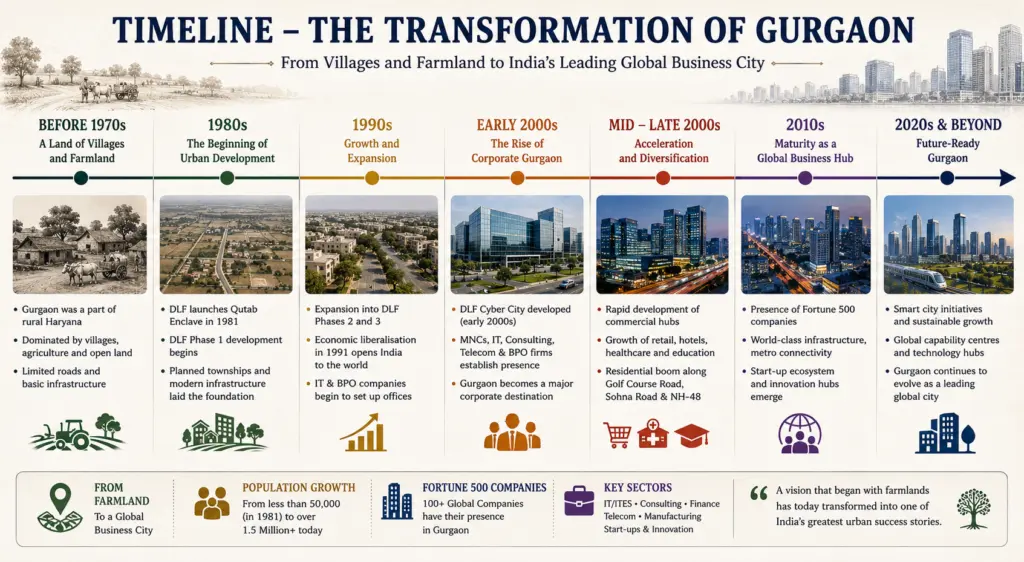
Gurugram’s transformation from a cluster of villages into India’s corporate capital is often celebrated as one of the country’s greatest urban success stories. Gleaming skyscrapers, multinational corporations, luxury residential communities, and world-class commercial districts have come to define the city’s modern identity. However, beneath this remarkable growth lies a more complex reality.
The rapid pace of urbanisation has brought with it a series of challenges that continue to affect millions of residents. While private-sector-led development helped create modern Gurugram, infrastructure and civic services have often struggled to keep pace with the city’s explosive expansion.
One of the most persistent criticisms of Gurugram’s development model is the mismatch between rapid construction and public infrastructure. Although the city boasts some of India’s finest private developments, many areas continue to face problems related to roads, drainage, sewage systems, and public transport.
Heavy rainfall frequently exposes these weaknesses. During the monsoon season, several parts of the city experience severe waterlogging, leading to traffic disruptions and raising concerns about drainage planning. Major roads, including sections of NH-48 and key arterial roads, have occasionally witnessed significant flooding during intense rainfall events.
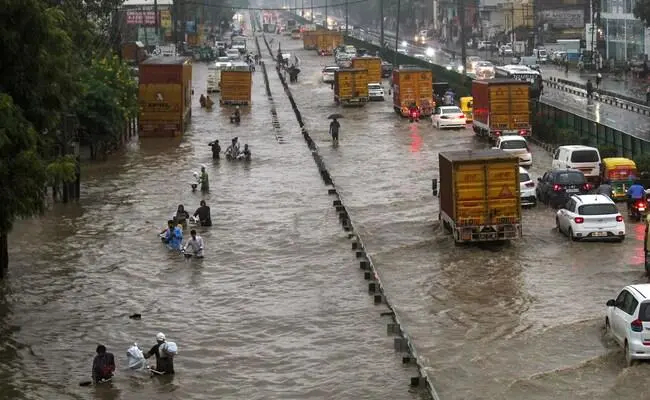
As Gurugram emerged as a major employment centre, the number of vehicles on its roads increased dramatically. The city now witnesses some of the highest traffic volumes in the National Capital Region.
Key corridors such as NH-48, Golf Course Road, Sohna Road, and the Delhi-Gurugram Expressway often experience severe congestion during peak hours. Rapid population growth, increasing car ownership, and dependence on private vehicles have intensified commuting challenges for residents and office-goers alike.
Despite improvements in metro connectivity and road infrastructure, traffic management remains one of Gurugram’s most pressing urban issues.
Ironically, a city built on former agricultural land now faces significant water-related challenges. Rapid urbanisation has placed enormous pressure on groundwater resources, leading to declining water tables across many parts of Gurugram.
The large-scale conversion of open land into concrete infrastructure has also reduced natural groundwater recharge. In addition, the loss of wetlands, green cover, and traditional water bodies has increased environmental vulnerability.
Environmentalists have repeatedly expressed concerns regarding the degradation of the Aravalli ecosystem, which plays a crucial role in maintaining regional biodiversity, preventing desertification, and supporting groundwater recharge.
Like much of the National Capital Region, Gurugram frequently experiences poor air quality, particularly during winter months. Multiple factors contribute to declining air quality, including vehicle emissions, large-scale construction activities, industrial pollutants, and seasonal agricultural stubble burning in surrounding regions.

The challenge of balancing economic growth with environmental sustainability has therefore become increasingly important for policymakers, businesses, and residents.
Gurugram is often described as India’s most prominent experiment in private-sector-led urbanisation. While this model enabled rapid development, critics argue that it also resulted in fragmented governance.
Unlike traditionally planned cities, many aspects of Gurugram’s development were driven by private developers rather than a single integrated public authority. Consequently, responsibilities for roads, utilities, drainage, and civic services are often shared among multiple agencies, creating administrative complexities.
Proponents maintain that private investment played a crucial role in driving rapid growth and modernization, whereas critics argue that more robust public planning, regulation, and governance were necessary to promote sustainable and equitable urban development.
Rapid economic growth has also created visible social contrasts. Luxury residential towers and premium business districts coexist alongside older villages, informal settlements, and areas with limited civic infrastructure.
This contrast highlights the broader challenges associated with rapid urbanisation in developing economies, where economic opportunities often coexist with significant disparities in access to public services and quality of life.
Despite these challenges, Gurugram continues to evolve. Governments, private developers, civic agencies, and residents are increasingly focusing on issues such as sustainable development, improved public transport, environmental conservation, and smart city initiatives.
The future of Gurugram may ultimately depend on how effectively it balances growth with sustainability, infrastructure development, and inclusive urban planning.
The story of Gurugram is therefore not just one of extraordinary success, but also a reminder that rapid urbanisation brings complex challenges that require equally ambitious solutions.
Few cities in modern India have experienced a transformation as dramatic as Gurugram. What was once a largely agrarian district on the outskirts of Delhi has evolved into one of the country’s most important economic engines. Today, Gurugram has emerged as a powerful symbol of India’s rapid urban transformation, private-sector-driven growth, and increasing integration with the global economy.
Often referred to as the “Millennium City,” Gurugram is now home to millions of residents and thousands of businesses. The city hosts numerous multinational corporations, Fortune 500 companies, start-ups, technology firms, financial institutions, consulting giants, and global capability centres, making it one of India’s most significant corporate hubs.
Over the past three decades, Gurugram has established itself as one of the leading business destinations in Asia. Major international companies across sectors such as information technology, consulting, finance, telecommunications, e-commerce, and manufacturing have established large offices in the city.
Business districts such as Cyber City, Udyog Vihar, Golf Course Road, Golf Course Extension Road, and Sohna Road collectively form one of the largest concentrations of corporate office space in India. The presence of these enterprises has transformed Gurugram into a key contributor to both Haryana’s economy and India’s services sector.
Gurugram is also recognised as one of India’s premier luxury real estate markets. Landmark residential developments such as DLF The Camellias, DLF The Aralias, DLF The Magnolias, and several premium gated communities have attracted business leaders, entrepreneurs, expatriates, and high-net-worth individuals.
Neighbourhoods including DLF Phase 5, Golf Course Road, Golf Course Extension Road, and parts of New Gurgaon have emerged as some of the country’s most expensive residential locations.
The city’s real estate market continues to evolve, with developers increasingly focusing on integrated townships, smart homes, sustainable buildings, and mixed-use developments.
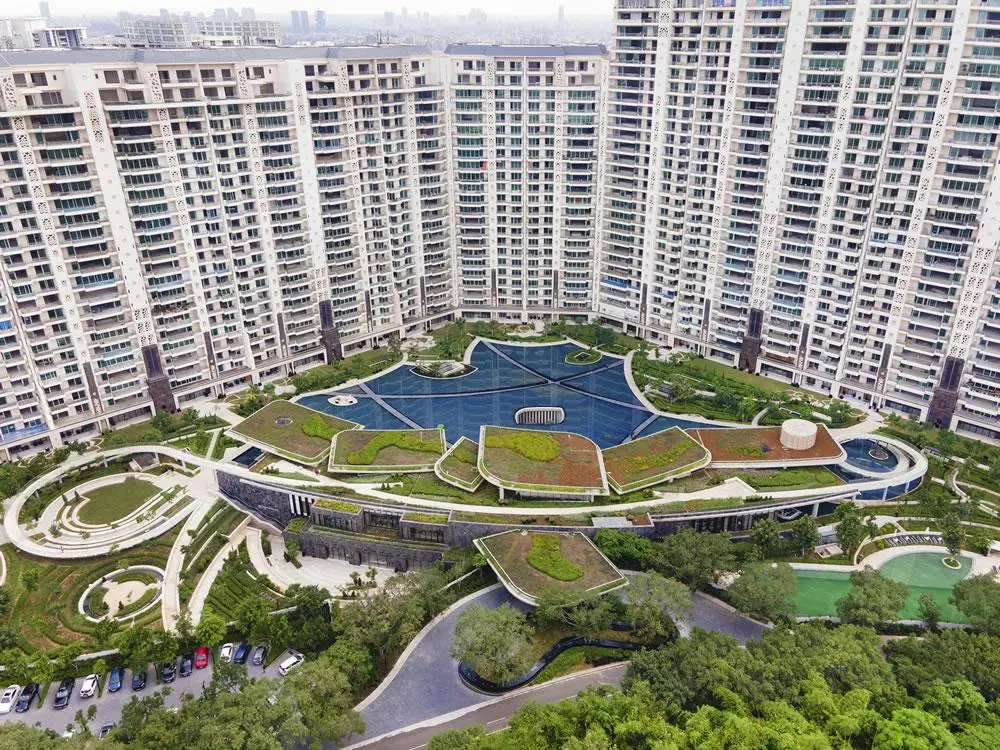
Beyond multinational corporations, Gurugram has developed into one of India’s most vibrant start-up ecosystems. Numerous technology start-ups, fintech firms, e-commerce companies, and global capability centres operate from the city.
The availability of modern office infrastructure, access to skilled talent from the National Capital Region, and strong connectivity to Delhi have made Gurugram an attractive destination for entrepreneurs and investors alike.
Modern Gurugram benefits from extensive connectivity infrastructure. National Highway 48, the Delhi Metro, the Rapid Metro, the Delhi-Gurugram Expressway, and proximity to Indira Gandhi International Airport provide strong regional and international connectivity.
Major infrastructure projects such as the Dwarka Expressway, Southern Peripheral Road (SPR), and ongoing metro expansions are expected to further strengthen the city’s connectivity in the coming years.
At the same time, policymakers continue to address challenges related to transportation, drainage, environmental sustainability, and civic infrastructure to support future growth.
Perhaps Gurugram’s most distinctive feature is its development model. Unlike many Indian cities that evolved primarily through government-led planning, much of modern Gurugram was shaped by private developers, particularly DLF.
This unique approach has led many urban scholars to describe Gurugram as India’s largest and most ambitious experiment in private-sector-led city building. The city demonstrates both the immense possibilities and the complex challenges associated with privately driven urban development.
As India continues to urbanise, Gurugram is expected to remain at the forefront of economic growth, innovation, and real estate development. Emerging trends such as sustainable urban planning, smart city technologies, electric mobility, and green infrastructure are likely to play an increasingly important role in shaping the city’s next phase of growth.
From a mythological village associated with Guru Dronacharya to a globally recognised business destination, Gurugram’s journey represents one of the most remarkable urban transformations in contemporary India.
Today, Gurugram stands not merely as a city, but as a living experiment in how private enterprise, economic liberalisation, and urban ambition can collectively reshape an entire region.
Despite its global reputation as India’s corporate capital, Gurugram’s history is filled with fascinating stories, surprising milestones, and little-known facts that many residents and visitors remain unaware of. From ancient mythology to groundbreaking real estate developments, these facts offer a deeper understanding of how the city evolved into the urban giant it is today.
The city’s modern name, Gurugram, literally translates to “Village of the Guru.” According to tradition, the region was gifted to Guru Dronacharya, the legendary teacher of the Pandavas and Kauravas in the Mahabharata. The city was officially renamed from Gurgaon to Gurugram by the Haryana government in 2016, reviving its ancient identity.
Much of present-day Gurugram—including Cyber City, Golf Course Road, and DLF Phases 1 to 5—consisted of agricultural land, grazing fields, and villages just a few decades ago. The rapid urban transformation witnessed since the 1980s remains one of the fastest in modern Indian history.
DLF was founded in 1946 as Delhi Land & Finance, just a year before India achieved independence in 1947, laying the foundation for what would eventually become one of the country’s most influential real estate companies. The company initially focused on developing planned residential colonies in Delhi before expanding into Gurgaon.
Before transforming Gurgaon, DLF developed several iconic neighbourhoods in Delhi, including South Extension, Greater Kailash, Hauz Khas, and Kailash Colony. Many of these areas continue to rank among the capital’s most prestigious residential locations.
When DLF began acquiring land in Gurgaon during the 1970s, many observers considered the decision highly risky. The region lacked proper roads, infrastructure, and basic urban amenities. At the time, few imagined that Gurgaon would one day become a global business destination.
Launched in the early 1980s as Qutab Enclave, DLF City is widely regarded as one of India’s earliest and most ambitious privately developed integrated townships.
The development of DLF Cyber City in the early 2000s fundamentally changed Gurgaon’s economic trajectory. It provided multinational corporations with world-class office infrastructure at a time when demand for premium commercial spaces in India was rapidly increasing.
Today, Gurugram is home to offices of numerous Fortune 500 companies spanning sectors such as technology, consulting, finance, telecommunications, and manufacturing, making it one of India’s most important corporate ecosystems.
Unlike many Indian cities that primarily expanded through government-led planning, a significant portion of modern Gurugram was developed by private companies. This has led urban scholars to describe the city as India’s largest experiment in private-sector-led urbanisation.
Even today, Gurugram remains under constant transformation. New infrastructure projects such as the Dwarka Expressway, metro expansions, and emerging business districts continue to reshape the city’s skyline and urban landscape.
These lesser-known facts illustrate that Gurugram’s story is far more than a tale of real estate development—it is a story of vision, risk-taking, entrepreneurship, policy shifts, and one of the most dramatic urban transformations in modern India.
The story of Gurugram is unlike that of any other Indian city. From its ancient association with Guru Dronacharya and centuries as a quiet agrarian region to its emergence as a global corporate powerhouse, Gurugram’s journey reflects the extraordinary pace of India’s economic and urban transformation.
What makes this transformation particularly remarkable is the pivotal role played by DLF and visionary leaders such as K.P. Singh. At a time when few believed in Gurgaon’s potential, DLF undertook the ambitious task of building an entirely new urban ecosystem from the ground up. Through projects such as Qutab Enclave, DLF City, Cyber City, and numerous residential and commercial developments, the company fundamentally reshaped not only Gurugram’s skyline but also the future of private real estate development in India.
Yet, Gurugram’s story is not solely one of success. The city also highlights the challenges that accompany rapid urbanisation—ranging from infrastructure deficits and environmental pressures to governance complexities and social disparities. These challenges serve as important lessons for policymakers, urban planners, developers, and cities across India that aspire to replicate Gurugram’s growth model.
Today, Gurugram stands as India’s most significant experiment in private-sector-led urbanisation—a city that continues to evolve, innovate, and redefine itself. Its journey from farmland and villages to skyscrapers and multinational headquarters demonstrates how vision, entrepreneurship, policy reforms, and strategic planning can collectively transform an entire region.
As Gurugram enters its next chapter, shaped by sustainability initiatives, smart infrastructure, and new growth corridors, one thing remains certain: the history of Gurugram and the story of DLF will remain inseparable, forever linked in one of the most remarkable urban transformations in modern Indian history.